Showing posts with label Indian Industries. Show all posts


Current Status and Size of the Market
  • Globally, India is ranked among the top 10 major suppliers of aluminum and steel
  • India produces 35 million tonnes of steel annually
  • India is the No.1 producer of sponge iron in the world
  • Annual domestic consumption of aluminum and copper are over 0.75 million tonnes and 0.4 million tonnes respectively
  • Indian metal industry employs about one million people and generates over $13 billion in revenues (2004-05)

Structure of Indian Metal Industry

  • Large number of integrated players, such as SAIL and Tata Steel in steel and Hindalco and Nalco in aluminum, dominate the industry
  • This industry has a significant presence of public sectors:
  • Steel Authority of India Ltd. (SAIL) has 32% of India’s installed capacity of crude steel
  • Nalco has 38% of India’s installed capacity of aluminum
  • Among the private players, Tata Steel, Hindalco and Sterlite are the major companies in the industry

GOI Policy

100% FDI is allowed under the automatic route for metallurgy and processing of all metals

Potential & Opportunities
  • Steel consumption in domestic market is forcast to grow by 8% p.a. To 60 million tonnes by 2010
  • Indian metal industry has the potential to become one of the world’s top five suppliers and top five markets for aluminum and stee
  • Demand for Aluminum is expected to grow @ 10% p.a. for the next 10 years
  • The current low per capita consumption of metals is projected to increase substantially in the recent future
  • Large global metal manufacturers including POSCO, Mittal Steel and Dubai
  • Aluminum have announced plans for setting up plants in IndiaInvestments of over $15 billion for integrated steel manufacturing and about $5 billion for aluminum manufacturing are needed by 2010

Stumble Upon Toolbar

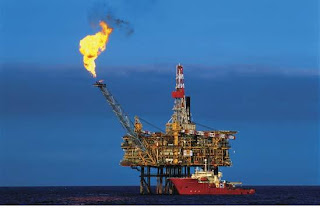
Oil and Gas Sector of India
Oil and gas is a lifeline of a nation. For they not only fulfill the day to day domestic requirement but also cater to many industries. India no doubt is a vast nation and that too developing. India is developing very fast and lots of industry needs the constant and uninterrupted supply of gas and oil. Hence Government has chalked out various programmes and policies to open this sector for the private participants. Initially it was the government agencies that were solely responsible for oil and gas exploration and its distribution. But post 1991 period saw many reforms and policies that allowed private sector also to play an important and crucial role.
Facts and Figure

  • Nearly 35% of India’s energy requirements iss fulfilled by oil and natural gas
  • Oil and natural gas are critical for industries like petrochemicals, fertilizers and energy
  • Domestic production of crude oil is 33.4 MMT whereas the demand is about 116 MMT. There is a vast mismatch between demand and production.
  • During the last three years, Crude oil imports have been increased by 7% p.a.
  • There is also mismatch between the demand and the production of natural gas. The demand of natural gas is about 150 MMSCMD (2004) while the domestic supply is only 81 MMSCMD
  • In the last few years, many gas fields have been explored.


Major players and presence in value chain


Industry Structure

  • Oil exploration and production is carried out by both public sector companies and private sector.
  • Public sector companies have the major share. Oil and Natural Gas Commission (ONGC) and Oil India Limited (OIL), accounts for 83% of the total domestic oil and gas production
  • The role of both domestic and foreign players is increasing every year.
  • Private sector/Joint venture companies have made 32 significant hydrocarbon discoveries in the last four years
  • Reliance Industries Ltd. has made the world’s largest gas discovery in 2002 (about 5 trillion cubic meters)
  • Some of the major foreign players present in India are Hardy Oil & Gas, Niko Resources and Cairn Energy

Government Policy

  • Government has permitted 100% FDI for the exploration of Crude Oil and Natural Gas through the automatic route
  • To facilitate Private sector participation in Oil and Gas exploration
  • The New Exploration Licensing Policy (NELP) has been enacted since 1998
  • Under the NELP programme, more than 108 oil blocks have been awarded since 1999 through global competitive bidding
  • To explore CBM blocks, new policy, Coal Bed Methane (CBM) Policy has been formulated which provides for attractive fiscal and contract terms
  • An Independent Regulator for Oil & Gas will be established after the enactment of Petroleum and Natural Gas Regulatory

Investment Opportunity and Business Potential

  • By 2012, it is expected that the demand for crude oil might increase to about 190 MMT
  • The global price of crude oil is increasing, therefore government is focusing more on E & P to expand domestic production
  • The demand for gas is expected to rise to 330 MMSCMD by 2012
  • The growth in this sector is expected in next seven years is 10% p.a
  • The demand for gas will increase due to increasing use of its for power generation, petrochemicals, fertilizers and city gas distribution
  • There is huge gap between the demand and the supply. This gives enough opportunities to the investors for investment
  • Opportunities also lie in exploration and production of Crude Oil, Gas and CBM
  • Through the active partnership of the private sector government is actively promoting the creation of Strategic Oil & Gas reserves
  • There is still huge potential for exploration. According to estimates nearly 32% of the Indian sedimentary area is still unexplored.
  • Private players such as Cairn Energy, Reliance energy, etc have recently discovered huge area of oil and gas fields which indicates that there is huge potential in this sector
  • For exploration and production of oil and gas there is still a need of $7-8 billion of investment

Stumble Upon Toolbar

IT Sector of India
India is the most preferred destination for providing IT and IT Enabled Services (ITeS). In 2004-05 the total revenues generated by this sector was $28.2 billion. Out of the total revenue, IT Services and Software constituted 59%, IT Hardware about 21% and ITeS about 20%. Out of the total world market, India accounts for 33% of the market in 2004.Out of the total revenues,69% of the industry revenues are accounted by the Indian companies whereas, International companies account for the rest. About 45% of Fortune 500 corporations source software from India


Industry Structure
Both the domestic private sector and the international players are operating in India. The IT industry in India can be divided into following groups:

Group 1
Under this lie both large and medium Indian IT and ITeS companies. Some of the big companies in this sector are: Tata Consultancy Services, Infosys, Wipro, and HCL

Group2
Major international MNCs who have set up development centers in India. Some of the
major MNCs are: IBM, Dell, Microsoft, HP, etc.

Group 3
Under this category, large Global corporations like JP Morgan, American Express, GE, Citigroup, HSBC, British Airways, etc. are included which have set up Captive back office operations in India


Government Policy

  • Government of India in order to promote Investment in IT sector has allowed 100% FDI is permitted in this sector under the automatic route
  • Government has also established SEZs, EOUs and Software Technology Parks to encourage IT industry. Units setting there operations in these areas are also being provided income tax exemptions
  • Information Technology (IT) Act, 2000 has legalized the acceptance of electronic records and digital signatures which provided a legal backbone to e-commerce

Major IT and ITES Companies in India


Investment Opportunity and Business Potential
  • Almost every major IT players are present in India. It is estimated that ITES is set to grow five-fold over the next 5 years.
  • By 2012, it is expected that the Indian IT and ITeS industry would grow to $148 billion.
  • IT sector, would grow over 25% p.a. over the next seven years
  • Government of India has aimed to achieve a 50% share in the global off-shored IT and BPO services by 2008

Key Drivers of IT sector

  • Presence of talented and low cost workforce and world-class companies
  • Availability of technically-skilled and English-speaking labor force at lower costs as compared to USA and Europe
  • Expertise in project and process management
  • Strength of India has been recognized globally
  • India is highly capable in higher, value added activities and in the Global Delivery Model
  • Identification of custom application development and maintenance as priority areas due to high off-shoreable component by the leading international
  • Several regulatory and technological factors, have led to the growth of domestic IT & ITeS market
  • Efforts are being taken to stop software piracy
  • Lots of efforts are being taken to make PCs available to large section of the population

Stumble Upon Toolbar


Indian Tourism Industry
India is a huge country with lots of scope in investment in tour and travel sector. The total size of tour and travel industry of India is $32 billion that is 5.3% of GDP. Government has launched various programmes and has taken many initiatives to boost this sector. Incredible India is one of the programme which aims to popularize India as a hot destination for tourism.

Facts and Figure

  • Total size of the industry- $32 billion
  • In 2004, total number of tourist arrival in India- 3.3 million an increase of over 20% from the previous year
  • Total domestic tourist in 2004- 270 million
  • Domestic market growth in the last 4-5 years- 20% p.a.
  • Number of hotels across the country- 1,800 Number of hotel rooms- 100,000 (Five star hotel rooms constitute
  • 27%, four-star 7.5% and three-star 22%)
  • Rooms occupied in 2004-05- 70%


Industry Structure
  • The hotel industry in India is dominated mainly by large Indian groups like The Taj Group, Oberoi, ITC, Leela and Bharat Hotels.
  • Apart from Indian ownership, there are lots of international like Sheraton/Starwood, Inter Continental, Hyatt, Marriott, Hilton, Le Meridian, and Carlson. These chains are either represented by management or franchise contracts
  • Some other international players like Shangri-La, Four Seasons, Ritz Carlton and Mandarin are also in the process to establish their presence in India, primarily through management contracts
  • 30,000 rooms are represented by the branded segment that is 30% of the total hotel stock. In the last five years, there was Compounded growth
  • Three star hotels grew at about 11% whereas the four star segment grew at about 9%

Government Policy
Government has permitted 100% FDI in Hotels and Tourism, through the automatic route


Investment Opportunity and Potential

  • There is a huge opportunity in this sector. As per estimates, by 2007, foreign tourist arrival may grow to 5 million by 2007 which could double to 10 million by 2010-12
  • Over next five years, domestic tourism is also expected to increase by 15% to 20% p.a.
  • Average room rate is also expected to grow rapidly until sufficient new supply comes on stream
  • In 2005, the average room rates increased by 21% as compared to 2004. The maximum growth was registered in 4-star and 5-star segments
  • Rapid growth of population, good demography, and rapid growth of economy ensures uptrend in the domestic demand for hotels – for business and leisure
  • Trade activity and investment is increasing in India that would increase International inbound traffic
  • India is a home of cultural diversity and natural beauty that will attract the foreign tourists
  • Travel will bee further boosted due to the coming of more budget airlines/lower air-fares, open sky policies and expected improvements in travel infrastructure such as roads, airports and railways
  • Over 100,000 hotel rooms need to be added over the next five years which presents opportunities in all price and value chain segments
  • There is also an opportunity in hotel-asset construction and ownership
  • Since the there is low penetration of brands in this sector. Hence there is an opportunities for management contracts and franchising with local hotel owners/ developers
  • The sector offers investment opportunity of about $8-10 billion in the next 5 years

Stumble Upon Toolbar

Current Status and Size of the Market

  • By revenue, Electronics Hardware in India is a $11 billion industry .India's share of the global market is just 0.6%
  • Fast becoming a manufacturing base for consumer electronics and telecom equipment; the sector includes design, manufacture and assembly of products related to:
1. Consumer Electronics (TV, DVD, Audio systems): about $3.9 billion (FY 05)

2. Industrial Electronics: about $2.1 billion (FY 05)

3. Computers (PC, Servers, Laptops): about $1.4 billion (FY 05)

4. Telecom Equipment (Phones and Network Equipment): about $1.6 billion (FY 05)

5. Electronic Components: about $1.6 billion (FY 05)


Structure of Indian Electronics Hardware Industry

  • Indian Electronics Hardware industry supplies primarily to the domestic market. Exports are limited to passive components like capacitors, resistors, wound components, CD-ROMs, colour picture tubes, etc.
  • In the areas of consumer electronics and telecom equipment, India is fast becoming a manufacturing base
    Almost all major global players, such as Siemens, Texas Instruments, Matsushita, Alcatel, LG, Samsung, Sharp and Lenovo have already set up manufacturing operations in India. Many more have R&D centres
  • Flextronics, Solectron, Jabil Circuit and other international contract manufacturers have already set up base in India

GOI Policy
  • 100% FDI is allowed under the automatic route with a few exceptions:

  • An Industrial license is required in case of aerospace and defense equipment manufacturers

  • The National Electronics Hardware Manufacturing Policy is proposed to resolve tariff and duty related issues and set up hardware manufacturing clusters/ parks

  • Electronic Hardware Technology Parks set up to encourage investment in the sector in several cities e.g. Bangalore and Cuttack

Potential & Opportunities

  • Indian Electronics Hardware industry is forecast to grow very fast in the coming years

  • Will reach $62 billion by 2010 from about $11 billion in 2005

  • Domestic consumption will see 33% CAGR

  • Exports will grow faster

  • Four countries – China, South Korea, Taiwan and Malaysia – account for over one-third of world production
    India’s inherent advantages of availability of adequate engineering talent and low cost structure can be leveraged to advance its position in the global market

  • Growing domestic market fueled by increase in penetration

  • Domestic market provides opportunities in manufacture of consumer electronic goods and mobile handsets

  • New SEZ Act with duty-free imports and income-tax concessions will facilitate creation of large-scale manufacturing units for the world market

Global market opportunities in Electronics Manufacturing Services include:

  • Contract Manufacturing: $500 billion outsourcing opportunity by 2010 of which India can tap $11 billion

  • Design Services: $7 billion projected by 2010

  • Component Exports: $5 billion projected by 2010

  • The sector requires large investment of about $17 billion over the next 5 years – Some mega projects have already been announced and there is visibility for about one third of the investment required

Stumble Upon Toolbar

Retail Sector of India
India is second most populated country of the world. It is the third largest economy of the world. The presence of healthy middle class population ensures huge prospect in the growth of retail sector. This sector is opened recently by the government of India for the foreign players. Keeping the size of India in mind, the retail sector is not very developed and there are huge prospects for its growth and development. India is one of the ten largest retail markets in the world. In 2004, the total retail sales were $206 billion. Out of these $206 billion, organized Retail was just 3% of total retail sales that is $6.4 billion p.a. Organized retail is however picking up very fast and it is growing with an average growth rate of over 20% p.a. in the last 5 years


Structure
The retail sector of India is not well organized. There are over 12 million retail outlets with an average outlet size of less than 500 sq.ft. Retail Chains of India are of mid size. Some of the important retail chains of India are Pantaloon, Shoppers’ Stop, Food world (RPG Group) and Westside (Tata Group). These retail chains mainly deal with apparel and the grocery items. Apart from the Indian retail chains foreign retail chains are also present in India. Some which are Dairy Farm, Metro, Shop rite and Marks & Spencer. However these international brands have a marginal presence through either franchisee or wholesale formats
Top Players in Retail Industry


Government Policy for the Retail Sector
  • 100% FDI is permitted in Cash and Carry Wholesale formats
  • Franchisee arrangements are allowed For single brand product, FDI upto 51% is permitted

Investment and Business Potential
  • It is expected that by 2015 the retail sector market would grow to the size of $660 billion
  • In the next ten years, India would be among the top 5 retail markets in the world
  • By 2015, the organized retail is expected to grow to $100 billion and would constitute 12-15% of total retail sales.
  • The domestic retail sector will grow due to increase of high income population, increasing urbanization, Increasing use of credit cards by the consumers, rising Population especially between the 20 to 49 years age band

There are huge opportunities in the following sector:

  1. Food and Grocery
  2. Home Improvement
  3. Consumer Durables
  4. Apparel and Eating Out
  • The sector also provides opportunity to the investors to invest in a supply chain infrastructure. India is also emerging as one of the important sourcing base for a wide variety of goods for international retail companies. Some of the international brands like Wal-Mart, GAP, JC Penney etc. are already procuring from India

Stumble Upon Toolbar


Investment in Banking Sector of India
Banking and Financial sector is one of the fast3est growing sectors in India. Lots of foreign banks and financial institution have shown interest in Investing in this sector in India. It is estimated that the sector provides investment opportunity of $25billion in the next five years.


Facts and Figure

  • The banking sector and the Financial Services sector based on sound fundamentals is growing very fast in India.
  • In the year 2004, the total banking assets was $450 billion in 2004. Since 1991 this has shown the robust growth of 15% p.a.
  • Market capitalization of the Indian bank is over $450 billion. Turnover of the banks have grown to $1,170 billion in 2003-04 from $285 billion in 2002-03
  • Since 1993, the Mutual Funds assets have shown the strong growth of 13% p.a . Total mutual fund asset in 2004 was $45 billion.
  • More than 40 Venture Capital and Private Equity Funds operate in India

Structure
Large part (75%) of the market is held by the public sector banks. However private Indian banks and the foreign banks are growing very fast .The three topmost foreign banks operating in India are Standard Chartered Bank, Citibank and HSBC which accounts for more than 65% of the total assets of foreign banks. There are many global players of banking & financial services are operating in India. Some of them are - Morgan Stanley, Merrill Lynch, JP Morgan, Deutsche Bank, UBS, ABN Amro, Barclays, Calyon etc. Apart from banking sector there are also many companies that are doing very well in mutual fund sector. Some of these companies are as - UTI Mutual Fund, Prudential ICICI, HDFC, Franklin Templeton, Birla and Tata


Government Policy

  • RBI, Reserve Bank of India is the sole regulator for the Banking and Financial Services industry.
  • RBI has issued guidelines to adopt Basel II by December 2006. All the foreign investment in this sector requires prior approval of RBI.
  • Foreign banks are allowed to operate in India either by setting up branches or through a wholly owned subsidiary, after approval by RBI.
  • Foreign share in the Indian banks can be upto 74% with a 5% cap on ownership by any one entity

Business Potential and Opportunities

  1. Banking and the financial sector contain huge potential of investments and returns on those investments. By 2010, it is expected that banking sector would grow $915 billion with an average growth rate of 15%.
  2. According to estimates nearly $70 billion additional equity is needed for growth plus Basel II compliance. Moreover the market of mutual fund is also expected to grow by 15% till 2010. The growth in retail finance is also expected to grow at an annual rate of 18%, from $27.6 billion in 2003-04 to $64.2 billion by 2008-09.
  3. The retail off take is high because majority (54%) of the population is in the 15-35 years age group. The economic growth of 12% and the increasing capital expenditure by the Government and private industry too would give a boost to this sector.
  4. Small scale enterprise account for 40% of the industrial output and 35% of direct exports. SME lending which is still an untapped market presents a lucrative opportunity to the foreign and the domestic investors. Moreover the improved asset management practices - Gross NPAs to Advances ratio reduced from 24-25% in 1993 to 7-8% in 2004, too indicates the health of the banking sector and hence the investment and the growth opportunity.

Stumble Upon Toolbar

Real Estate in India
The rising population, rapid economic growth and the continuous demand of improved infrastructure have made real estate and the construction sector, the most lucrative sector. The growth of urban population has led to the building of many residential houses. New commercial centers, shopping malls and entertainment houses are mushrooming in India at a rapid pace. Lots of foreign investments have been made. It is expected that in the next five years nearly $50 billion investment would be made in this sector. The industry is expected to grow with an average growth rate of 30% p.a.


Facts and Figure

According to study, Real Estate and Construction is a $12 billion (by revenue) industry in India
In the past few years, real estate and the construction industry have taken strides

Structure of Real Estate and the Construction Industry

The construction industry and real estate sector has few organized players, many of whom have only a local or regional presence

Big corporate houses are very less in this sector
This is the most profitable venture in India, because as compared to developed countries, the profit of margin is very high here. The profit of margin in India is more than 20% whereas in the developed nation, the profit of margin is 5% to 6%.

Institutional finance in Real Estate has stared recently and is in the formative stage.
Government has allowed the Real estate venture funds. Some of the Indian banks like ICICI Bank, SBI and HDFC have promoted real estate venture funds
There are many foreign Real Estate and Finance companies like GE Commercial Finance, Tishman Speyer, Ascendas and Farallon Capital have entered the Indian market

Major Players of Real Estate and Construction Industry

Government Policy
· Government has permitted 100% FDI in real estate development. However this investment is subject to minimum scale norms which are:
  • Either 25 acres in case of serviced plots or integrated townships; or
  • 50,000 sq. mtrs. of built-up area for construction development projects

Potential

There are many reasons that would help the investors to reap maximum benefits.

1. Population is growing and so is the demand for more houses. The demand of housing is increasing because of the availability of easy loans at a very low rate of interest. Moreover there are many tax incentives that are provided by the government to those who takes housing loans.

2. The rapid growth of Retail, IT/ ITeS and Hospitality sectors have led to the demand for commercial and office space. Recently government has announced Urban Infrastructure Renewal Mission. This is expected to further boost and strengthen this sector.

3. Nearly $11.5 billion has been earmarked over the next five years for 60 cities

4. For every segment of the business, there is an investment opportunity: For example in the next five years, about 20 million new units expected to be built. The growth of IT sector necessitates more office space. The growth of retail sector also requires much Commercial space. By 2010 it is expected that the retail sector may require 200 million sq. ft. Hospital and the Hotel industry is also expanding very fast to meet the requirement of the people.

5. Real estate and the construction industry present the investment opportunity of over $50 billion in the next five years.

6. Morgan Stanley, Merrill Lynch, AIG, Blackstone and Calpers are some of the foreign institutional investors who have shown interest in investing in Indian real estate and the construction industry sector.

Stumble Upon Toolbar

Insurance Sector of India
Insurance is one of the most important and the fastest growing service sector in India. Initially Government was the major player in this industry but now in the post reform period, many private players both foreign and domestic have entered this sector. Insurance sector provides the investment opportunity of $4-5 billion in he next five years.

Facts an Figure
  • The total size of insurance industry in India is about $10 billion (premiums). As compared to 2003-04 the insurance sector grew by 25% in 2004-05.
  • The total premium collected in the life Life insurance was $5.8 billion in the year 2004-05. This amount was created from for 26.2 million policies. The registered growth was of 36% over 2003-04
  • The other important segment of Insurance are Motor, marine, fire and health insurance. The premium collected from these segments in the year 2004-05 was $4.2 billion


Major Players In Insurance Sector


Structure of Insurance Sector
● Initially insurance industry was controlled by the government sector however, in 1999-2000 the insurance market was opened to private & foreign investment
● There are many foreign players who are doing business in this sector. Some of the major foreign players are: AIG, Aviva, MetLife, New York Life, Prudential, Allianz, Sun Life, Standard Life and Lombard. These foreign players are present with small stakes in joint ventures with Indian companies for both Life and Non-life segments
● The major market share in the field of Life Insurance is still dominated by Life Insurance Corporation (LIC). Life insurance corporation holds 78% share of the market
● In the case of non life insurance field, private sector companies both independently as well as joint ventures with foreign insurers account for 20% of the market and have grown at 60% p.a.

Major Players In Insurance Sector


Government Policy
● Government has permitted FDI up to 26% under the automatic route. The FDI is however subjected to to obtaining a license from the Insurance Regulatory and Development Authority (IRDA)
● As decided by the government this participation would be increased upto 49% in the near future
● Insurance sector is regulated by the Insurance Regulatory Development Authority (IRDA)

Business Potential and Opportunity

  • Insurance market in India is lucrative market that is expected to grow with the average annual rate of 20%. The market is growing fast and the by 2010, the total market of the Insurance sector would be around $25 billion
  • India has a huge population. World's 17% of the population resides here yet it is still 0.6% of the global insurance market. Nearly 80% of Indians still require Life, Health and Non-life insurance. The penetration of insurance is low. It is just 2.9% as compared to the world average of over 8%. Whereas, the penetration of Non-life insurance is even lower which is less than 1% in 2003.
  • In 2004, the Per capita life insurance premium was $16 which is quite low as compared to the average world per capita life insurance premium which is around $292
    The robust economic growth and the increasing awareness of the risk factor have also contribute in the growth of this sector.

Stumble Upon Toolbar

India has got huge resource of metal resources. It is one of the top producers of Mica, Coal, Iron, Bauxite, Aluminum etc. Metals are necessary for various industries hence this sector is nodal for industrial development. Government of India has initiated many reforms in this sector to pace up the mining activity.
Facts and Figures
  • The rich resource of India includes iron ore, bauxite, chromium, manganese and titanium
  • The iron ore reserves of India is fifth largest in the world. India has nearly 13 billion tonnes of iron ore reserves
  • India has fourth largest bauxite reserves. Total bauxite reserves of India is around 2.3 billion tonnes
  • The total manganese reserves of India is 160 million tonnes, which makes it 2nd largest country in terms of manganese reserve in the world
  • India stands third in chromium reserves. The total chromium reserves of India is 57 million tonnes
  • The quality of Indian Bauxite and Iron are among the best in the world
Industry Structure
  • Out of the total mining activity, the share of the Public sector companies is 80%
  • After the post reform period of 1991 some of the private players are also joining mining and metallurgical sector. Some of the major Private players engaged in mining and metallurgical sector are- Tata Steel, Hindalco and Sterlite
  • Public sectors engaged in this venture are- SAIL, Nalco, National Mineral Development Corporation (NMDC) and Hindustan Copper
  • The major mineral ore producing regions of India are Orissa, Jharkhand and Chattisgarh. Orissa has the largest reserves of bauxite reserves and over 20% reserves of iron ore


Government Policy
In order to enhance the productivity of mining government is encouraging investments for value added metal manufacturing. Government of India has permitted 100% FDI under the automatic route for mining of metal ores


Investment Opportunity and Potential
  • There is an investment opportunity of $10 -15 billion in this sector in the next five years. The growth in the metal manufacturing industry will also enhance the growth of this sector.
  • The production of Iron ore might grow at a CAGR of 10 - 12% over the next five years, due to increasing demand from the steel industry
  • The production of Bauxite is also expected to double to over 23 million tonnes by 2010
    The consumption of manganese and chromium is also expected to grow
  • India has good quality reserves
  • The conversion cost and the cost of the labor is low
  • There is a ready made market in India. The domestic demand of various minerals is increasing
    India's geographical position is such that it is closed to the developed European markets and the fast-developing Asian markets for export of Steel, Aluminum
  • According to reports, nearly 82 billion tonnes of reserves of various metals are yet to be tapped
  • There is a good scope in investing in mining of Iron ore and Bauxite
  • The aluminum production capacity of India is just 3% of world capacity whereas the total bauxite reserves in India is 7.5% of the world’s total bauxite deposits, this simply reflects that there is requirement for new capacities
  • International metal manufacturing players like POSCO, Mittal Steel and Alcan have announced plans for expansion in India

Stumble Upon Toolbar

Investment Opportunity in Coal Sector
Coal is a life breadth for any nations infrastructure. India has a huge reserves of coal. It has the fourth largest coal reserves in the world. The total reserves of cal in India is 248 billion tonnes. It is vital for the energy sector. Most of the coal mines in India is used for electrical power generation. Nearly 60% of the electricity is produced using coal.


India is the third largest producer of coal. India produces nearly 360 million metric tonnes p.a. Nearly 143 Blocks having 11% of the total coal reserves for captive use i.e. power generation, steel plants have been identified by the ministry of coal. There are nearly 80 blocks that are either allocated or in the process of being allocated.

Coal Mining Industry Structure
Coal mining is mainly in the hands of public sector. 85% of total coal production in India is done by Coal India Ltd. Private sector privatization is limited to captive mines for steel plants (such as Tata Steel) or for power generation

Government Policy on Coal Sector
Private players are allowed to participate in the captive mines or coal processing for captive mines. All sale of coal is routed through CIL , coal India Limited. Merchant sale is not allowed. It is in the captive mines that FDI is permitted. For FDI, upto 50% no FIPB approval is required. However in case the FDI is higher it requires FDI approvals. The end use of the mining is the major factor that determines the limit of the FDI. For instance:


  • Mining of coal and lignite for captive consumption for power generation- 100% FDI is allowed
  • For steel and cement Industry- 74% of the FDI is allowed
  • Coal processing that includes coal washing and sizing- 100% FDI is allowed


Investment and Business Potential
  • There is huge potential in coal mining sector. By 2012 the demand of coal would increase upto 800 MMT p.a.
  • There is still shortage of coal and this shortage is expected to rise to 50 MMT p.a. by 2007
  • Due to rapid economic growth there is a surge in the demand of power. This may result in the growth of a Coal sector.
  • The shortage of peak power is 12%
  • The technology used is old. Hence for better production, there is a need for improved technology, and better productivity at existing mines.
  • In the next 10 years the coal sector presents the opportunity of US$ 30-40 billion investment. This investment would be – to explore new coal mines, Manufacture latest mining equipment and technology and create the sound infrastructure for off-take of mined coal

Stumble Upon Toolbar

Chemicals

Chemicals
Current Status and Size of the Market
India constitutes a relatively small portion of the global market; constituting only 1.9% of global sales and 1.5% of international trade The Indian Chemicals Industry had a turn-over of over $40 billion in 2004-05; constituting about 6% of GDP and 12.5% of the industrial production India is the 12th largest producer of chemicals in the world Exports of over $12 billion in 2004-05 Manufactures more than 70,000 products


Structure of Indian Textiles & Garments Industry
The Indian chemicals industry is fragmented with very few large companies with global presence There are over 6,600 chemical manufacturers in India Basic chemicals constitute major share of exports Global majors, like BASF, Dow Chemical, Bayer and Du Pont have operations here


GOI Policy

1.) 100% FDI under the automatic route is allowed for most chemical items

2.) Government/FIPB approval and license are required for few hazardous chemicals

3.) Government plans to set up port based chemical parks in SEZs to encourage clustering, provide infrastructure and enable tax concessions

4.) Plans are there to create downstream SEZs to use the output of these Chemical Parks


Potential & Opportunities
  • The Industry is projected to grow to $80 billion by 2010
  • 15% p.a. Growth rate is projected for the next 5 years
  • India will share 3.9% of the global industry by 2010 from just 1.9% in 2001
  • India is projected to be the 3rd largest consumer of polymer by 2010
  • Huge and rapidly growing domestic market potential because of low per capita consumption of key petrochemical products
  • Plastics: 3 kgs. against global average of 17 kgs.
  • Polymers: 4 kgs. against global average of 23 kgs.
  • India has a good R&D base with access to low-cost, high-quality work force
  • All major raw materials are easily available locally or readily importable
  • SEZs are exempted from import tariffs and offered income tax concessions
  • Strategic location: High-growth domestic markets, Asia and the Middle East
  • Vibrant downstream industry and a large number of small players provide opportunities for JVs, alliances and acquisitions
  • Most attractive segments are Basic, Specialty and Knowledge Chemicals
  • Total opportunity for investment: Over $75 billion in the next 10 years

Stumble Upon Toolbar

Automobiles

Current Status and Size of the Market

  • The Indian Auto Industry is a $24 billion industry; About 4% of GDP
  • Exports constitute 5% of Indian revenues
  • 8.6 million vehicles produced in India in 2004-05
  • 1.2 million Passenger Cars. This sector registered 13.5% CAGR over the last 4 years
  • 6.6 million Two-wheelers (motor cycles and scooters); 15% CAGR over the last 4 years
  • 0.38 million Commercial Vehicles; 24% CAGR over the last 4 years
  • 0.37 million Three-wheelers; 17% CAGR over the last 4 years
  • India still has low vehicle penetration
  • Only 3 cars, 50 two-wheelers per 1000 individuals
  • Global Auto OEMs are setting up new manufacturing facilities in India
Structure of Indian Auto Components Industry
  • Organized sector with a mix of large domestic private players (Tata, Mahindra, Ashok Leyland, Bajaj, Hero Honda) and major international players including GM, Ford, Daimler Chrysler, Toyota, Suzuki, Honda, Hyundai and Volvo
  • All big global players have set up manufacturing facilities in India

GOI Policy
100% FDI allowed through the automatic route


Major Domestic Players


Major International Players


Potential & Opportunities

  • India to be world’s 3rd largest car market by 2030: Keystone
  • Indian auto market projected to double in the next 7 years
  • Vehicle production expected to increase from 8.6 million vehicles in 2004-05 to 15 million by 2010-11
  • Overall, the market will grow at 12% p.a.:
  • Passenger Cars and Two-wheelers expected to be the fastest growing segments
  • Heavy Trucks to drive growth in commercial vehicles
  • Potential need for investment of over $13 billion in the next 5 years
  • Global majors including Suzuki, Hyundai and Honda have committed resources of over $2 billion for capacity expansion
  • India has the opportunity to become a major player in the global CV and two-wheeler market, a global hub for manufacture of small cars and for Engineering and Design Services

Stumble Upon Toolbar

Auto Components

Auto Components
Current Status and Size of the Market

  • The Indian Auto Components is a 8.7 billion industry; 16% of this was exported ($1.4 billion)
  • India currently has only a small, 0.4% share of the global Auto Components market, in spite of the high growth in the past few years
  • Domestic market has exhibited high growth - CAGR of 23% in the last 4 years
  • Exports has grown at a CAGR of 34% in the last 4 years
  • The Industry is highly fragmented, with fewer than 5 players with revenues over $250 million
  • However, Indian manufacturers are gaining recognition as “global quality” players
  • 50% of Indian Auto Components exports are to Europe and USA
  • 5 Indian companies in the automotive sector have received the coveted Deming Prize: the largest number outside Japan
Structure of Indian Auto Components Industry

  • It's a highly fragmented industry with less than 5 players with revenues over $250 million
  • Recently, Indian manufacturers are increasingly getting recognition as “global quality” players
  • Over 50% of Indian Auto Components exports are to Europe and USA
  • 5 Indian companies in the automotive sector have received the coveted Deming Prize: the largest number outside Japan
  • Global auto-component majors, such as Delphi, Visteon, Bosch and Meritor have set up operations in India
  • Many auto manufacturers including GM, Ford, Toyota, etc. and Auto Components manufacturers have set up International Purchasing Offices (IPOs) in India to feed their global operations
  • GM, Daimler Chrysler, Bosch, Suzuki, Johnson Controls etc. have already set up development centers in India
GOI Policy
100% FDI allowed through the automatic route

Major Players


Potential & Opportunities
  • Indian Auto Components Industry is expected to grow at a CAGR of 15% over the next 10 years
  • India’s share in global trade of Auto Components will grow from 0.4% in 2003-04 to over 3% by 2015-16
  • Domestic market projected to grow at over 8% p.a. In the next 10 years
  • Exports projected to grow at over 30% p.a.
  • India amongst the most competitive manufacturers of Auto Components; especially,
  • Metal Intensive components: Forgings, Stampings, Castings
  • Skilled Lab our-intensive components: Machining, wiring-harness, other electrical components
  • Hi-tech components: Electronic Fuel Injectors
  • India’s stock of high skilled engineering enables provides major MNCs an ideal base to set up engineering design and research centers in India
  • India could emerge as a global hub for engineering design and manufacture of key automotive aggregates
  • Investment need of over $5 billion required to cater to the domestic demand as well as the global opportunity

Stumble Upon Toolbar

Current Status and Size of the Market
  • Textiles & Garments constitutes about 5% of the GDP in India and the current value of the industry is $36 billion
  • India’s share of the world trade in textiles is currently only 3.5% compared to China's 20% share
  • Indian textile exports grew by 14% in 2004-05 over 2003-04; growth of over 20% in CY 2005
  • India is amongst the largest producers of:
  • Cotton (medium staple) – 16.75 million bales p.a.
  • Yarn - 4,170 million kgs. p.a.; about 25% share of world trade in cotton yarn
    Fabrics - 4,283 million sq.mts. p.a.
  • About 35 million people in India are directly employed in textiles & garments sector and it is the second
  • largest employer after agriculture.


Government of India Policy
100% FDI is allowed through the automatic route


Major players and presence in value chain


Structure of Indian Textiles & Garments Industry

  • The Indian textile industry is dominated by only a few large (organized)and numerous small and medium (unorganized) companies
  • Most of the small and medium companies don't have global presence but are cost-competitive for the advantages of ready availability of raw material and low-cost manpower
  • Cotton and synthetic fiber is available in large quantities
  • Many international brands, such as GAP, Wal-Mart, Tommy Hilfiger, Benetton, G Star, Levi’s and Marks & Spencer, are using India as a sourcing hub

Potential & Opportunities
  • The domestic and the export market are expected to grow at a very high rate
  • Forecasts say the industry is expected to reach $83 billion in the coming five years
  • The domestic market growth is driven by a larger consuming class and increasing per capita consumption (currently only 3 kgs. of fibre per capita: 1/3rd of world average)
  • India is hoping to become the second largest exporter of apparel among LCCs by 2010, next only to China
  • After the removal of international quota, India will convert its cost advantages into a larger share of the global market
  • Opportunity to also exploit India’s large and growing consumer market with increasing spending power

India's cost advantages of manufacturing textiles and garments derive from:

  • Abundant supply of inputs at competitive prices
  • Low cost labor with a range of skill levels – from unskilled labor to fashion design

Special Economic Zones will build on these advantages by:

  • Absence of domestic taxes or import duties
  • 5 year income tax holiday followed by income taxes at 50% of the normal rate for as long as 10 years
  • Reduced transaction costs
  • Better infrastructure
  • 25 integrated textile parks, planed by the Ministry of Textiles, are coming up soon
  • There are over $30 billion worth investment opportunities for capacity expansion and modernization
  • Recently, Carrera Jeans has announced its Jeans manufacturing plant in India with an investment of over $110 million

Stumble Upon Toolbar

Health Care Sector in India
Rising population, increasing government expenditure on health care sector, growing consciousness of the people regarding their health, attractive health insurance policies etc., are some of the reasons that have made health care sector as an important sector for investment. According to recent estimates there is an investment opportunity of $25 billion in the next five years.


Facts and Figure
  • Health care is one of the largest service sector in India
  • In 2005, the sector generated the revenue of about $30 billion that is 5% of the GDP
  • Health care industry is growing at the robust pace of over 12% p.a. in the past four years
  • The cheap and at the same time world class medical facilities is prompting the foreign nationals to flock here and avail the health benefits
  • Government is also promoting the concept of medical tourism. From 2001 to 2004-05, the medical tourists number have risen from 10,000 to 100,000
  • The reputation of Indian hospitals for providing quality services is increasing globally
  • According to NHS UK, India is a preferred destination for surgery
Health Care Industry Structure
  • The health care sector consist of independent, privately-run hospital and health care centers
  • Private health care centers accounts for the major share. Nearly 63% of the total spend is accounted by the private health care sector
  • Government health centers and the corporate health sectors account for the rest
  • Private sector corporate entities in the Indian health sector is quite low. Noted service providers in this sector include Apollo Hospitals, Escorts Group and Fortis Healthcare

Top Private Healthcare Providers in India


Government of India Policy

  • To encourage investment in the health care sector, government of India has allowed 100% FDI under the automatic route
  • Government has also accorded the infrastructure status to the hospitals
  • Lower tariffs on medical equipment
  • Government has also announced tax holiday for five years for the hospitals in rural areas

Investment Opportunity and Business Potential
There is a huge scope of investment in the health care sector in India. It is becoming one of the largest service providers in India. The health care industry is growing fast and it is expected that this sector would grow with the pace of 15% p.a. to $60 billion by 2010.

The world class yet cost effective services provided by the Indian health care industry would encourage the medical tourism. It is expected, that by 2010, medical tourism will become $2 billion industry.
More over health care BPO is also expected to become a $4.5 billion industry by 2008

Market Drivers of Health Care Sector

  • Health awareness is rising
  • Health insurance sector is also on the rise
  • Private sector companies are growing fast in terms of owning and managing hospitals
  • Growth in medical tourism
  • Cost effective surgical services. According to report, the cost of surgery in India is just about 10% of that in USA

Opportunities in various segments along the value

  • Diagnostics Services: Imaging and pathology labs
  • Infrastructure: Hospitals, Diagnostic centers
  • The benefits of health Insurance is availed by just 30-40 million Indians which is expected to rise to 160 million by 2010
  • Healthcare BPO is also growing fast. The services include medical billing, disease coding, forms processing and claims adjudication

Stumble Upon Toolbar

Power sector

Power sector presents immense investment opportunities. India is among the top five power generation countries. The power generation capacity of India is presently 122 GW; 590 billion units. Over the last four years CAGR is 4.6%. However, despite that per capita power consumption is still very low in India. It is just 606 units, which is less than half of China. India has third largest transfer and distribution network in the world which is around 5.7 million circuit km.

Power in India generated through various technologies. Power generated through coal is 57% , followed by 25% from hydel power, 10% gas based, 3% from nuclear energy and 5% from renewable sources

Power Production and Distribution Organization
State Electricity Boards and Public sector companies hold the major share in power generation and distribution in India. However in the recent years the share of private sector in Generation and Distribution has been increasing. The licence for distribution in many cities are already with the private sector. Many major power generation projects have been planned in the private sector


Major Players for Transmission, Generation and Distribution of Power


Government Policy
Government of India has come out with various policies to boost foreign investment in the power sector. Some of the major features of the policies of the government are:


  • Government has permitted 100% FDI for power Generation, Transmission & Distribution
  • In order to involve private players in power generation and distribution, government has passed Electricity Act 2003 and National Electricity Policy 2005
  • To boost investment government has also announced sops and tax benefits tto the private players. The incentives include Income tax holiday for a block of 10 years in the first 15 years of operation and also wavering of capital goods import duties on mega power projects that is any project involving the generation capacity above 1,000 MW
  • To look into the matters pertaining to power generation and distribution, Independent Regulatory authority has been appointed. Central Electricity Regulatory Commission looks a after central PSUs and inter-state issues. Each State has its own Electricity Regulatory Commission.

Overview

Due to rapid industrialization and growth of population, India requires huge amount of power. By 2012, India requires an additional power generation capacity of100, 000 MW. Moreover in India power generation through hydel power is still not tapped completely. According to report, over 150,000 MW of Hydel Power is yet to be tapped in India The supply of power is less than the demand. The situation is that there is all India average energy shortfalls of 7% and peak demand shortfall of 12%. Government initiatives regarding more tax benefits to the investors are likely to foster growth in all segments. Government has also decided to unbundled the vertically integrated SEBs. Government has also set to privatize the distribution circles whereas the regulatory authorities have come out with tariff reforms to boost investment.

Investment Opportunity Areas

Both domestic and the foreign investors can invest in the following areas for power generation:
  • Investment can be done in the Coal based plants at pithead or coastal locations (imported coal)
  • Power generation through natural Gas/CNG based turbines at load centres or near gas terminals
  • Hydel power presents huge investment opportunity. As per government report nearly 150,000 MW is still untapped.
  • Renovation, modernization, upgrading of old thermal and hydro power plants is another area where private and foreign players can invest
  • Power transmission too presents huge opportunity for investment. Nearly 60,000 circuit km of transmission network expected by 2012
  • Thirteen states in India have corporatised their State Electricity Boards. This provides opportunities to the investors to invest in the power distribution sector through bidding for the privatization of distribution in thirteen states that have unbundled/corporatised
  • Total investment opportunity of about US$ 200 billion upto 2012

Stumble Upon Toolbar